Work / Sony
Sony Any Surface UI
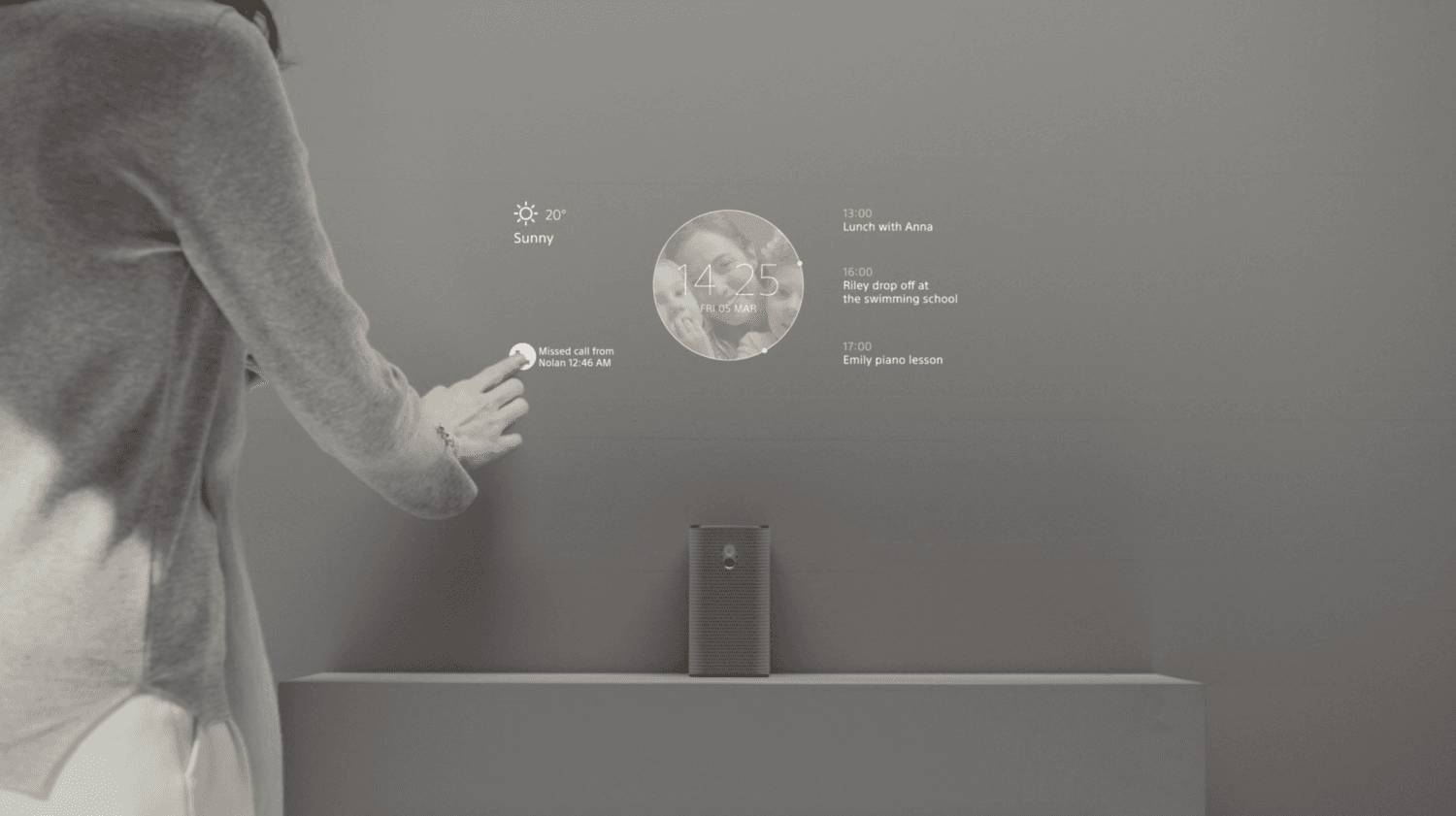
Any Surface is Sony’s IoT interface concept a UI that can render on any device, any surface, in any context. I led the design of the interaction system. The core idea: start with a point.
The Concept
A point zero-dimensional, universal is where every interface begins. From that point, lines emerge to define the display area. Then information surfaces. Then silence again. It sounds abstract. The execution was not.
We designed every state, every motion, every transition to feel warm and intelligent not mechanical. The motion of the dot gives the interface its personality. We designed it to feel organic, to imply something alive and responsive rather than cold and automated.
The Problem We Were Solving
IoT devices need interfaces that work without screens, without keyboards, without assumptions about what the user is looking at. We set four core design goals: high visibility across varying information density environments, scalability to low-power IoT constraints, natural dialogue-based agent interaction, and smooth screen transitions. Any Surface met all four.
The goal was a UI that would disappear when not needed and surface only when there was a clear reason non-intrusive, focused, and user-centric.
Voice and Visual
The hardest problem was not visual design it was dialogue design. How does a UI handle misunderstanding? How does it wait without feeling broken? Most AI-driven interfaces of the time defaulted to mechanical, impersonal responses when the agent could not understand the user.
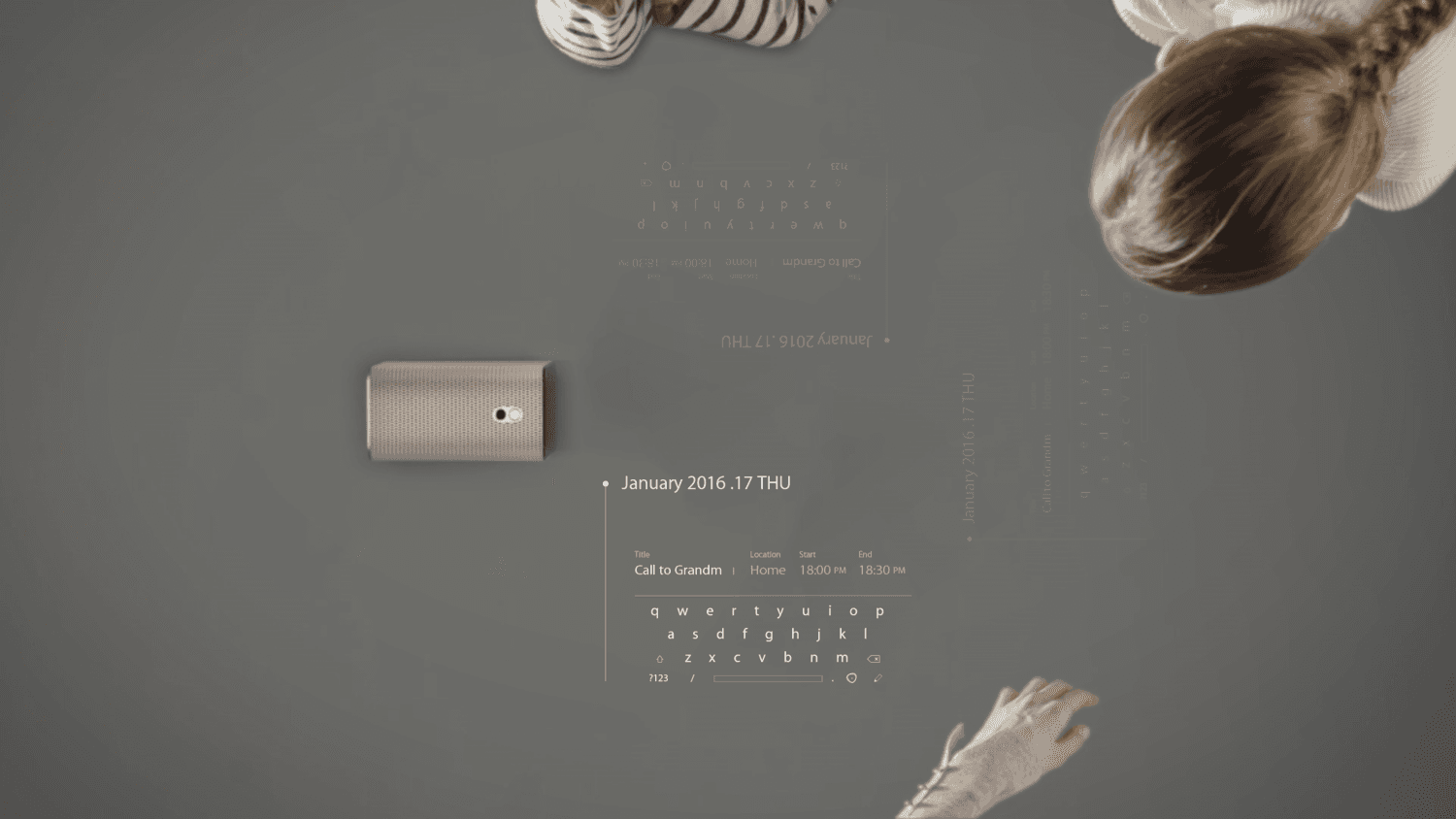
We built a modeless interaction model where voice and touch work interchangeably at any point. When the agent misunderstands, the UI surfaces text and graphics maps, graphs, choices the same way a human naturally reaches for a pen when words are not working. The dialogue system was a true Sony original. It remains the most technically and conceptually complex design challenge I have worked on.